


Pressing pause on work, school, or family to attend an overnight program is not always possible. Outpatient rehab can deliver meaningful addiction treatment while you keep your daily routine. If you are looking for care close to home, Sterling Crossroads provides an intensive outpatient program in Mount Sterling, Kentucky.
Kentuckians need help
Substance abuse has affected many Kentucky families. Overdose deaths were nearly 10 times higher in 2022 than in 2000. Numbers have started to come down since then, but communities across the Commonwealth continue to feel the impact. If drug and alcohol use is disrupting your life, reaching out for addiction treatment can help you find safer routines and support. Help is available locally and statewide.
Why outpatient rehab works for many people
Outpatient treatment allows you to live at home while attending structured therapy sessions multiple days per week. This flexible design helps people balance care with responsibilities such as work or caregiving. Many outpatient rehab programs include:
- Individual therapy, where you work on goals and coping skills one on one
- Group counseling, which builds peer support and accountability
- Family therapy to strengthen communication and boundaries at home
- Skills practice, such as relapse prevention strategies and life skills training
- Case management and referrals for social support needs and medical care
Outpatient care is not one size fits all. Levels of outpatient treatment programs include a partial hospitalization program, an intensive outpatient program, and standard outpatient services. The right level depends on your symptoms, safety needs, and home supports.
Outpatient drug and alcohol rehab
Outpatient rehab is substance abuse treatment you attend at an addiction treatment center without staying overnight. It can address alcohol addiction, opioid addiction, stimulant misuse, and other substance use disorders. Care often blends counseling with education, peer support, and planning for the recovery journey.
How outpatient rehab works
Most outpatient rehab program schedules include several therapy sessions each week. You might attend a mix of individual therapy, group therapy, and family therapy. Counselors teach relapse prevention, healthy routines, and ways to navigate triggers. Over time, the recovery process may include fewer hours of care as you gain stability, then continued check-ins to support long term recovery.
Types of outpatient addiction treatment services
There are three primary levels of outpatient care in addiction treatment:
- Partial hospitalization programs are the most intensive outpatient option, often 5 days per week with medical oversight and therapy. PHPs can be a step down from residential treatment or a step up from intensive outpatient.
- Intensive outpatient programs provide a structured schedule of therapy several days per week. Many people use IOPs to build momentum after inpatient programs or as a primary option if home supports are strong. Sterling Crossroads offers an intensive outpatient program in Mount Sterling.
- Standard outpatient services provide weekly or biweekly counseling, which can be a next step after completing higher levels of addiction treatment.
If you need medical detoxification, acute psychiatric stabilization, or 24-hour supervision, inpatient rehab is often the most appropriate first step, with a transition to outpatient treatment following.
Services you may find in outpatient treatment
Effective outpatient rehab centers use a comprehensive approach that blends counseling, education, and coordinated supports.
Therapy and support
Depending on your needs, therapy might include a combination of the following:
- Cognitive behavioral therapy teaches you to recognize thoughts and behaviors that fuel drug and alcohol use, then build healthier alternatives. Many treatment centers use cognitive behavioral therapy in both individual therapy and group counseling.
- Dialectical behavior therapy adds emotion regulation, mindfulness, and interpersonal skills. Outpatient rehab programs may include dialectical behavior therapy skills groups to help with urges and stress.
- Trauma therapy helps people process past events safely and reduce trauma related triggers.
- Family therapy strengthens communication, boundaries, and recovery roles at home.
- Relapse prevention therapy focuses on strategies specific to alcohol rehab, such as managing social situations and urges to drink.
Specialized therapies and supportive community programming can reduce isolation, offer accountability, and build recovery capital.
Medication-assisted treatment
Some programs provide or coordinate medication-assisted treatment for alcohol and opioid addiction. Medically assisted treatment can reduce cravings and withdrawal symptoms, helping lower the risk of relapse. Your outpatient care team may also coordinate medical care with your primary care clinician or specialists as needed.
Medications are not a fit for everyone, and they work best when combined with counseling. Ask each provider how they approach medications and how they monitor safety.
Co-occurring mental health needs
Many people managing substance use also experience mental health challenges. Quality addiction treatment services screen for co-occurring mental health concerns and coordinate care. Programs may provide dual diagnosis treatment, or they may refer you to community partners for ongoing mental health care. If you live with diagnosed mental health disorders, confirm the program can work alongside your prescriber and therapist.
How to choose an outpatient program in Kentucky
Finding the right fit can make treatment more sustainable. Below is a practical guide on how to find outpatient rehab in ky and compare options.
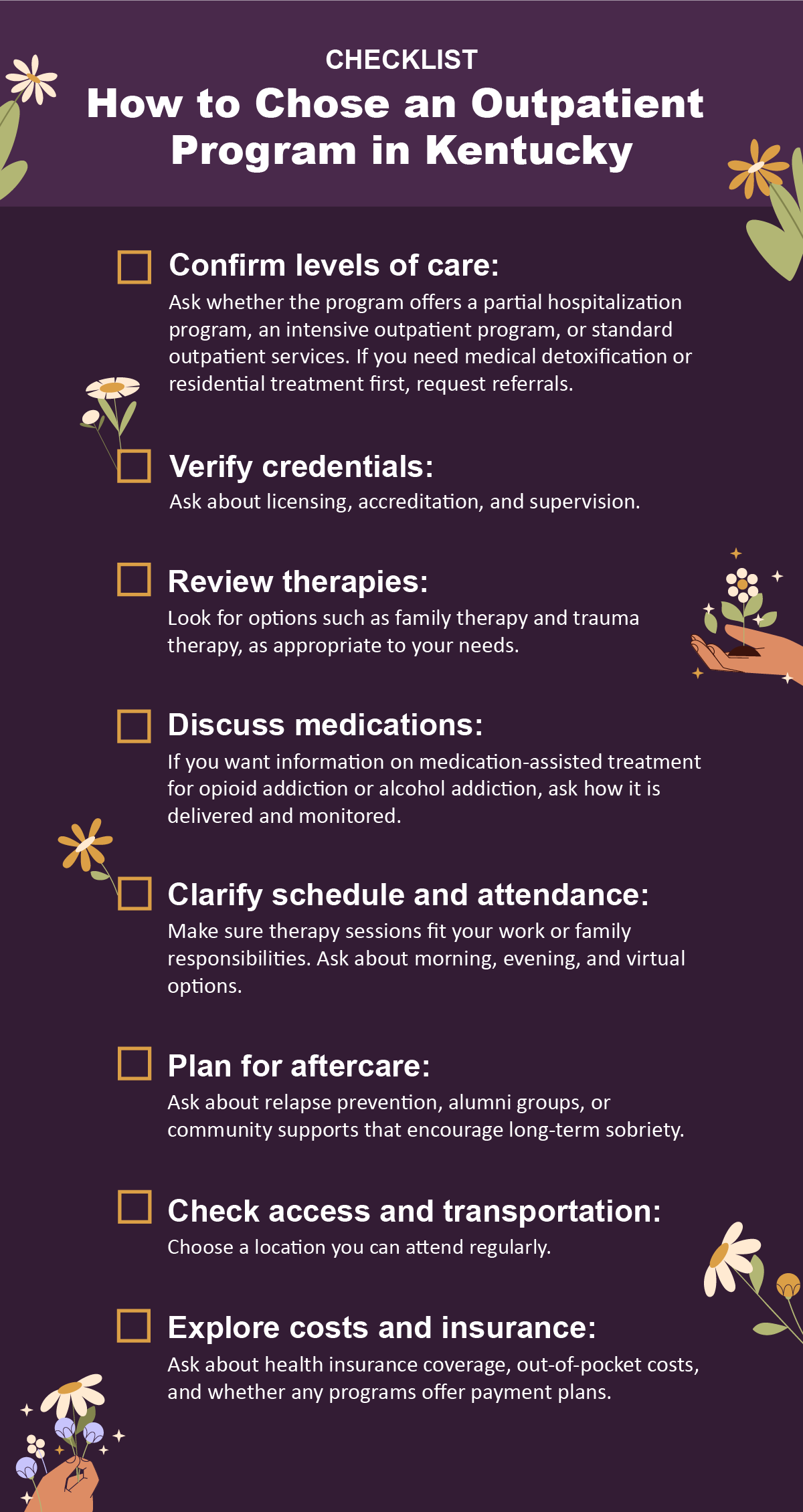
For help exploring options across the state, use the federal treatment locator from the Substance Abuse and Mental Health Services Administration.
Questions to ask each provider
Use these as a starting point and add your own:
- What treatment programs are available at your site? How do you personalize treatment plans?
- How often will I have individual therapy, group therapy, and family therapy?
- What relapse prevention strategies do you teach, and how do you support the recovery journey after discharge?
- Do you coordinate care for mental health concerns? Do you offer dual diagnosis treatment?
- Do you provide or coordinate medication-assisted treatment, and what monitoring is in place?
- How do you handle missed appointments and attending therapy during work hours?
- Do you provide referrals for medical detoxification, inpatient programs, or residential treatment if needed?
Costs and insurance in Kentucky
Rehab costs vary by level of care, length of stay, and insurance coverage. Some drug and alcohol rehab providers accept public or private health insurance, or offer payment plans to reduce out-of-pocket costs. Ask about:
- Verification of benefits, insurance coverage, and any deductibles or copays
- Sliding scales, scholarships, or payment plans when available
- What services are included in the fee, such as assessments, therapy sessions, and drug testing
If you need help navigating coverage for drug or alcohol rehab, many addiction treatment centers can walk you through options before enrollment.
When outpatient rehab might not be enough
Outpatient rehab is effective for many people, but some situations call for higher intensity:
- Severe withdrawal symptoms that require medical monitoring
- Unstable housing or safety concerns
- Significant medical or psychiatric needs that require 24-hour support
- Repeated relapse after past outpatient treatment
In these cases, medical detoxification, inpatient rehab, or residential treatment can provide a safer starting point. Many people begin with higher levels, then step down to an outpatient rehab program to continue progress.
What to expect at Sterling Crossroads in Mount Sterling
Sterling Crossroads is rooted in the local community and provides outpatient treatment in Central Kentucky. Our team respects your privacy and dignity, and we focus on practical, compassionate care. If you want a structured option that fits daily life, our intensive outpatient program may be a good match. If you need services beyond the scope of outpatient care, our team can discuss referrals to other local substance abuse treatment centers.
Frequently asked questions
How does outpatient rehab work?
Outpatient treatment delivers addiction treatment through scheduled therapy sessions and classes while you live at home. You practice skills in real time, then bring challenges back to your counselor and group. Many programs also help with case management and connections to supportive community resources.
What are the different types of outpatient rehab programs?
Levels include a partial hospitalization program, an intensive outpatient program, and standard outpatient services. These can range from 30 hours per week down to just a couple hours. The right fit at a given time depends on your symptoms, supports, and safety.
How many days is outpatient rehab, and how long do you stay?
Frequency varies. Intensive outpatient often meets several days per week for multiple hours per day, while standard outpatient may meet weekly. Length can range from a few weeks to several months. Personalized treatment plans guide the timeline.
How do you get into a rehab facility?
Call the program to schedule an assessment, bring identification and any insurance information, and ask what to expect. If a program cannot meet your needs, request referrals to other treatment centers or a higher level of care.
What is considered outpatient rehab?
Outpatient rehab refers to any structured substance abuse treatment without overnight stays. Care may include cognitive behavioral therapy, dialectical behavior therapy, group therapy, family therapy, and other supports.
How much does rehab cost in Kentucky?
Costs vary by level of care and insurance coverage. Ask the addiction treatment center to verify your health insurance benefits, review out-of-pocket costs, and whether they offer payment plans.
What if I also need help for anxiety or depression?
Many people have co-occurring mental health needs. Ask about dual diagnosis treatment and how the program coordinates care with mental health providers.
Your next step in addiction recovery
Recovery is possible. If you are ready to explore outpatient rehab in Mount Sterling, learn more about our intensive outpatient program. If another level of care fits better, we can help you consider options and referrals so you can overcome addiction with support that matches your needs.